01
Transparent mode
Displays off. Optical layer clear. The surface behaves like ordinary glass.

Patented technology. Korean Patent Publication No. KR 10-2846877.
A window when clear.
A display when needed.
Two transparent displays and one controllable optical layer turn a single glass surface into a clear window, a privacy screen, or two independent displays.
Explore the architectureThe limitation
Conventional screens face one direction. Conventional glass stays passive. Combining both usually means adding more hardware, more depth, and more compromise.
The shift
The layered system coordinates transparency and imagery so the same panel can reveal, conceal, inform, and communicate from either side.
See throughPreserve the view when information is not needed.
Control privacyReduce visibility, sunlight, or glare on demand.
Address both sidesDeliver independent content to different viewers.
The architecture
The invention places a transparency control layer between two transparent displays, then coordinates their pixels and optical state as one system.
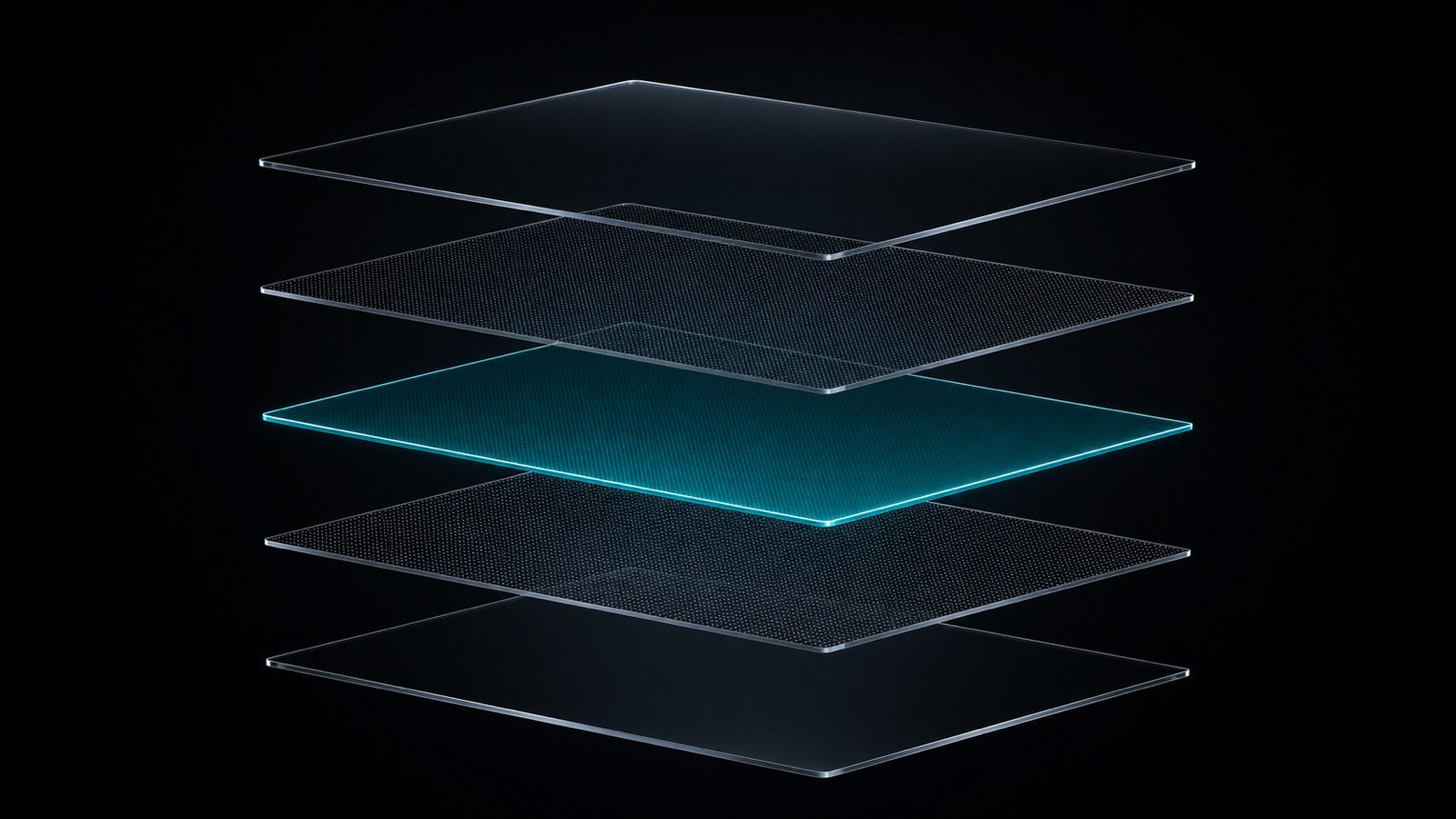
Presents information toward the first viewing side while preserving the optical path through the panel.
Switches between clear and opaque states—globally or by region—to manage visibility, contrast, sunlight, and privacy.
Faces the opposite direction and can mirror, reinforce, or independently change the information on display A.
Four operating states
Software coordinates the display and optical layers so the panel can move between states without changing its physical structure.

01
Displays off. Optical layer clear. The surface behaves like ordinary glass.
02
The middle layer turns opaque to block visibility and reduce glare or sunlight.
03
Each display shows different content while the opaque layer separates both viewing sides.
04
Selected regions display information or turn private while the rest remains transparent.
Local control
Display regions can be controlled more finely than the transparency layer. One area can carry information while another stays open to the world.
Groups of display pixels align with larger optical zones for practical local control.
Aligned imagery on both display layers can reinforce the same image and increase brightness.
Content, transparency, and viewing direction change together instead of operating as separate components.
Where it fits
Multi-Layer Display System turns glass from a passive boundary into a programmable interface.
Patented technology.